K-Industrial Services
Site Map
Technical Data on Tubular Mould
Mould Measuring Instrument
Casting Powder
e-mail me


Mould Dimension Eg.JPG

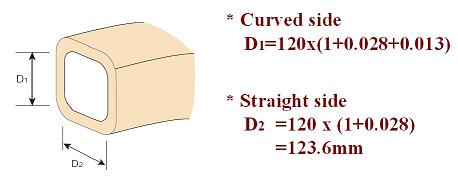
Mould Dimension [Inside Diameter]

Shrinkage of billet by cooling is approx. 3% but differs from steel grade.

Therefore, shrinking of billet for each steel grade should be applied in designing diameter.

In practical, the formula below is enough for deciding inside diameter.

*Curved side D1= S + a + ß
*Straight side D2=S + a

D : Inside diameter at mould bottom
S : Billet size
a : Shrinkage of billet by cooling (2.8-2.9%)
ß : Reduction by straightening (1.0-1.5%)



Corner Radius.JPG

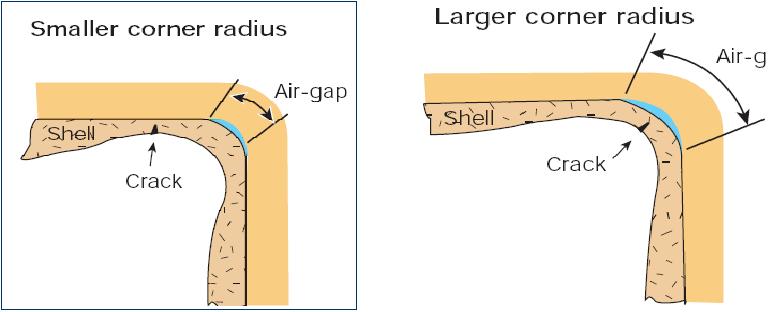
How the corner radius of the mould affects cooling of billet:

Larger corner radius of mould RESULTS in
Longer air gap at corner, THUS RESULTING in
Thinner shell at corner----undesirable.

Therefore, smaller corner radius is better for making shell of billet thicker.


Corner Radius Crack.JPG

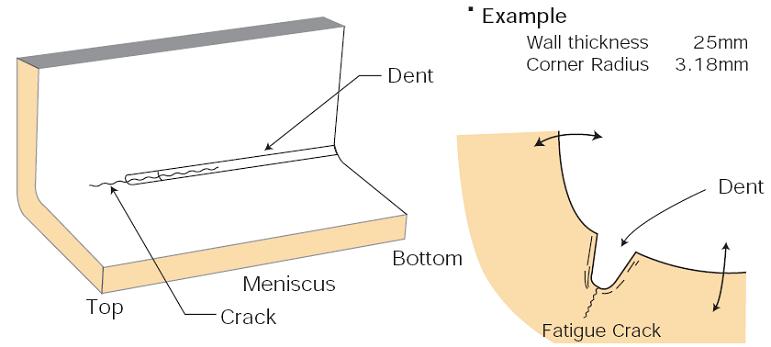
If corner radius in relation to mould size and wall thickness is too small, it will result in a notch effect where thermal stress is concentrated to the corner.


Mould Thickness.JPG

Mould Thickness

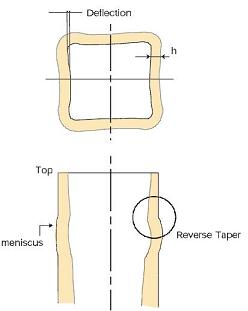
The thicker the wall of the mould,the more effective against deformation from the thermal load.

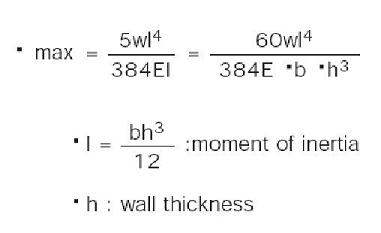
Deflection of the wall can be calculated as follows:


Deflection.JPG

Deflection is in proportion to the cube of wall thickness

A decrease of the overall heat transfer caused by an increase of wall thickness is rather small.


Disclaimer: Figures and data found on this page are meant for the purpose of technical discussions only. The use of figures and data should first be clarified with K-Industrial Services. We do not bear the responsibility for the misuse of the figures and data by anyone or any company.